Association of NROTC Colleges and Universities
  • Home
    • Executive Officers
    • Executive Committee Members
  • NROTC Units
  • Member Institutions
    • Member Institutions
    • Northwest Region
    • Southwest Region
    • Northeast Region
    • Southeast Region
    • Midwest Region
  • Annual Meetings
    • About Annual Meetings
    • Hosting an Annual Meeting
    • 2026 Annual Meeting, Washington, DC
    • 2025 Annual Meeting, Villanova, PA
    • 2024 Annual Meeting, Lincoln, NE
    • 2023 Annual Meeting, Tucson, AZ
    • 2022 Annual Meeting, Daytona Beach, FL
    • 2021 Virtual Annual Meeting >
      • Business Meeting Minutes
      • NSTC Situation Report
    • 2020 Virtual Annual Meeting >
      • NSTC Situation Report
    • 2019 Annual Meeting, Bronx, NY >
      • Navy Day
      • Business Meeting Agenda and Minutes
      • NSTC Situation Report
    • 2018 Annual Meeting, Los Angeles, CA >
      • Annual Meeting and Navy Day
      • Business Meeting Agenda and Minutes
      • NSTC Situation Report
    • 2017 Annual Meeting, Lexington, VA >
      • Annual Meeting and Navy Day
      • Business Meeting Agenda and Minutes
      • NSTC Situation Report
    • 2016 Annual Meeting, Washington, DC >
      • Annual Meeting and Navy Day
      • Business Meeting Agenda and Minutes
      • NSTC Situation Report
  • Membership and Dues
  • Contact us
  • BLOG/ Discussion

About Annual Meetings

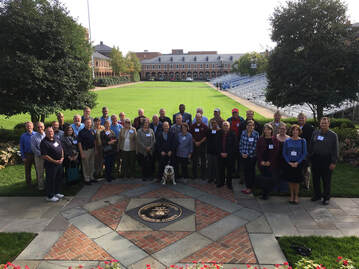
​​​How can your institution, as a host of Naval ROTC, benefit from membership in The Association and by sending a representative to the annual meeting?
 
By having a voice in discussions about NROTC Program changes, getting in-depth answers to questions arising from your institution’s support of the program, sharing in rich discussions around best practices with other member representatives, and building valuable relationships with other NROTC Host Institution representatives and Navy/Marine Corps Active Duty and senior civilian leaders NROTC Program leadership.
 
Over the years, The Association has engaged in productive discussions with Navy and Marine Corps leadership (CNET, NETC, NSTC) over a wide range of issues, providing key insights into the academic and post-secondary programmatic effects proposed policy or statutory changes could have on students and supporting institutions. Some of the most significant have included: improvements to Instructor Preparation based in the science of learning and the stark differences between military and university cultures; Precision Loading of scholarship midshipmen; the minimum SAT/ACT score required to qualify for an NROTC Scholarship; inclusion of the AFQT and the CLT along with the SAT and ACT as qualifying standardized tests in the scholarship application; the balance between whole person and academic components of a scholarship application and in the selection rubric; the minimum cumulative GPA required to remain in the program; whether midshipmen should be permitted to marry; pregnancy and continuation in the Program; tuition amount provided for scholarship recipients; the level of stipend support provided to Midshipmen; qualifications for appointment of Navy and Marine officers to faculty rank; viability formulae (to determine whether units should be continued); free choice of majors vs. requirement that some Midshipmen pursue technical majors and the percentages of technical majors; formation of consortia; the inclusion of summer training experiences as qualified internships in majors requiring internship experiences prior to graduation; merit-based, preparation-focused efforts to increase enrollment of those showing leadership potential who experienced poor secondary education, e.g., Summer Bridge Programs (paid for by Navy, now defunct) and the current NROTC Preparatory Program.

​


​Bottom line, the Association has been a valuable sounding board of academic and post-secondary institutional experts over the past 80 years, informing Naval leaders how NROTC Program policy changes could play out “on the ground” and how to avoid second and third-order unintended consequences – The Association and Naval leadership have shown each other things neither knew they did not know.

​


Picture
Picture
Picture
To learn more about hosting an Annual Meeting, click here.
  • Home
    • Executive Officers
    • Executive Committee Members
  • NROTC Units
  • Member Institutions
    • Member Institutions
    • Northwest Region
    • Southwest Region
    • Northeast Region
    • Southeast Region
    • Midwest Region
  • Annual Meetings
    • About Annual Meetings
    • Hosting an Annual Meeting
    • 2026 Annual Meeting, Washington, DC
    • 2025 Annual Meeting, Villanova, PA
    • 2024 Annual Meeting, Lincoln, NE
    • 2023 Annual Meeting, Tucson, AZ
    • 2022 Annual Meeting, Daytona Beach, FL
    • 2021 Virtual Annual Meeting >
      • Business Meeting Minutes
      • NSTC Situation Report
    • 2020 Virtual Annual Meeting >
      • NSTC Situation Report
    • 2019 Annual Meeting, Bronx, NY >
      • Navy Day
      • Business Meeting Agenda and Minutes
      • NSTC Situation Report
    • 2018 Annual Meeting, Los Angeles, CA >
      • Annual Meeting and Navy Day
      • Business Meeting Agenda and Minutes
      • NSTC Situation Report
    • 2017 Annual Meeting, Lexington, VA >
      • Annual Meeting and Navy Day
      • Business Meeting Agenda and Minutes
      • NSTC Situation Report
    • 2016 Annual Meeting, Washington, DC >
      • Annual Meeting and Navy Day
      • Business Meeting Agenda and Minutes
      • NSTC Situation Report
  • Membership and Dues
  • Contact us
  • BLOG/ Discussion